Buying Guides · 6 min read
Apex vs Pent Shed: Which Is Better for Your Garden?
Apex or pent? A straight answer from the workshop: how roof shape changes headroom, boundary height and rain run-off — and how to pick yours in a minute.
The honest comparison
Apex vs pent shed — which is better?
Two silhouettes, one honest answer from the workshop floor: it's not which roof is better — it's where your building is going.
Ask us which is better — apex or pent — and you'll get the same answer we've been giving since 1995: neither, until you tell us where it's going. Both come out of the same West Midlands workshop, on the same tanalised frames and panel construction. The roof line doesn't make one shed better built than the other. What it changes is where the headroom sits, how the rain gets off, and how tall the building stands — and all three of those are decided by your garden, not the brochure.
The short version: going tight against a fence, or within 2 metres of a boundary? A pent almost always wins. Standing in the open where you want maximum height down the middle? Go apex. The rest of this guide unpacks why.
What's actually different?
Apex: two slopes meeting at a ridge
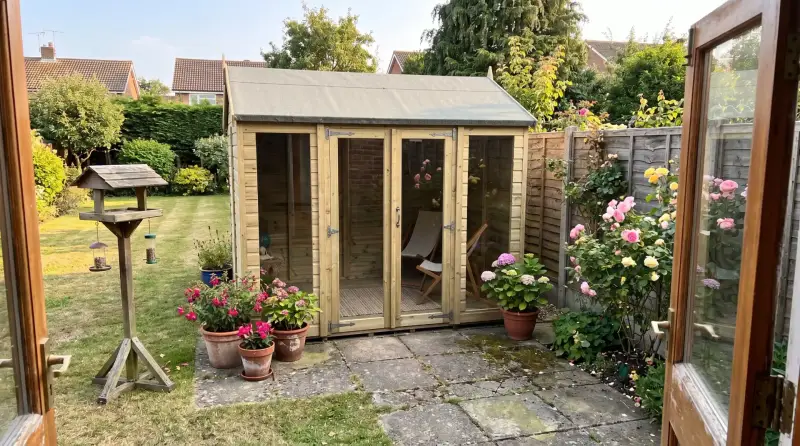
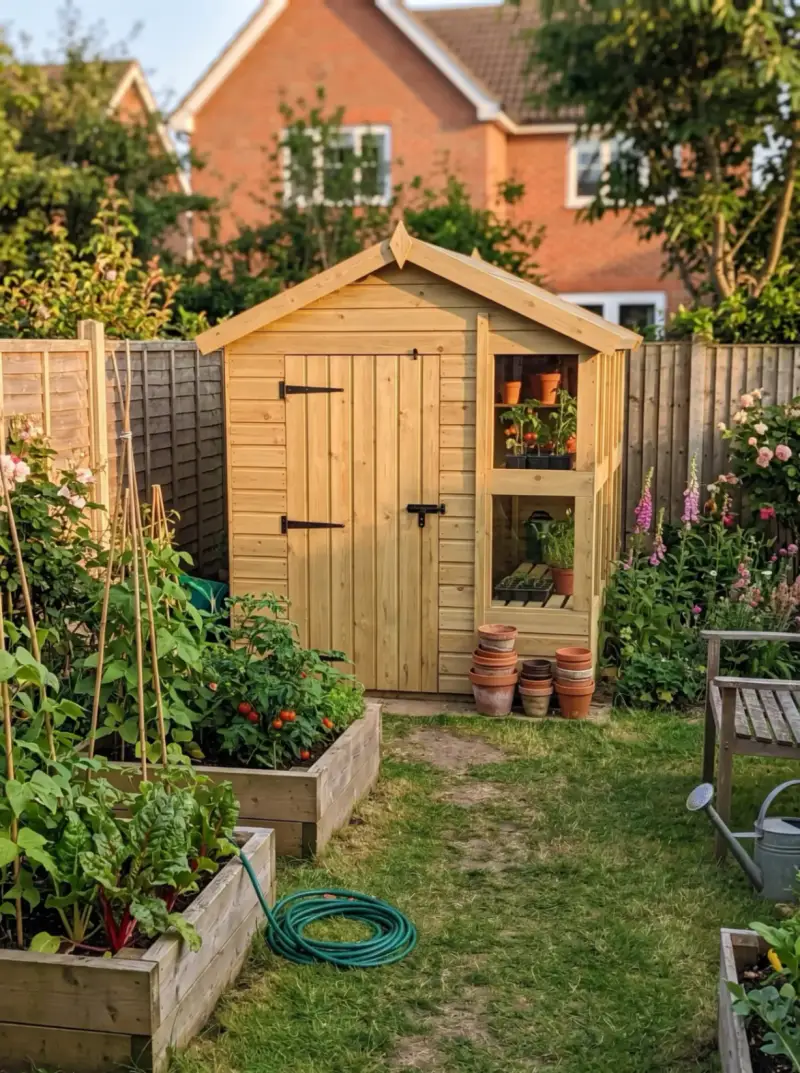
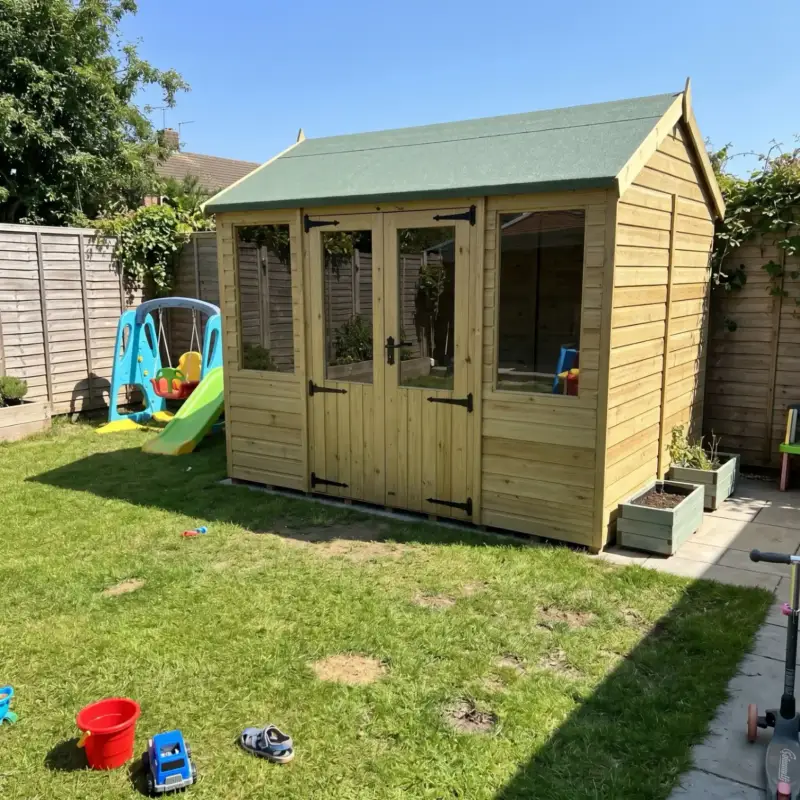
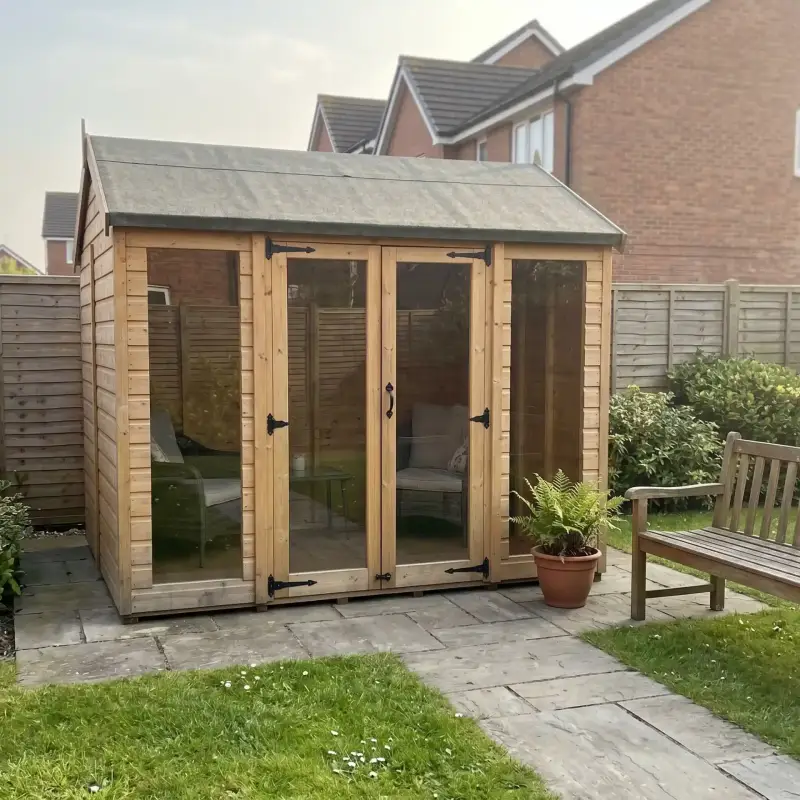
An apex shed has two sloping roof faces that meet at a central ridge — the classic silhouette a child would draw. That ridge puts the most headroom right down the middle of the building, which is exactly where you want it for tall storage, ladders stood on end, or a workbench running down the centre of a workshop. Rain and snow shed evenly off both sides.
Pent: one slope, front to back
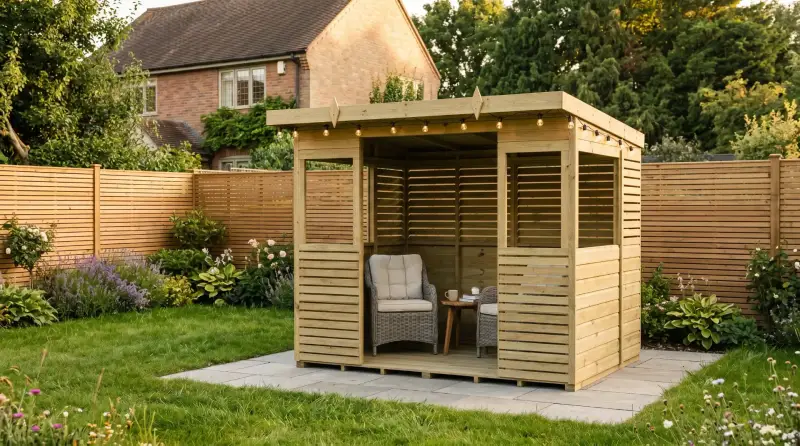
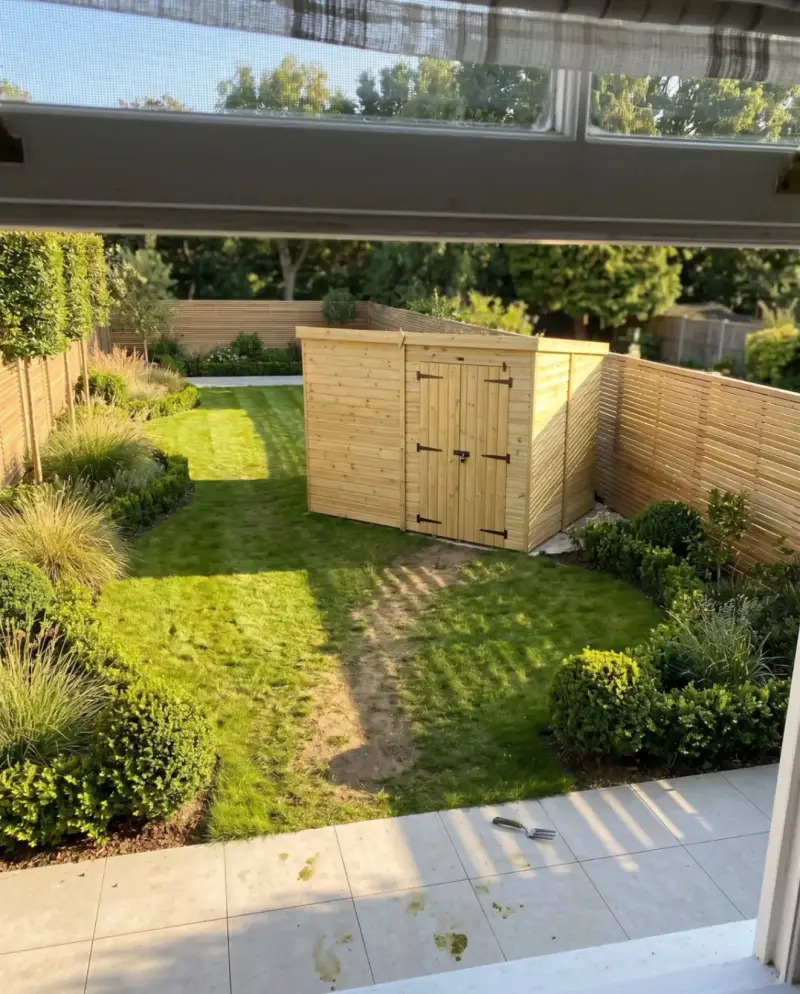
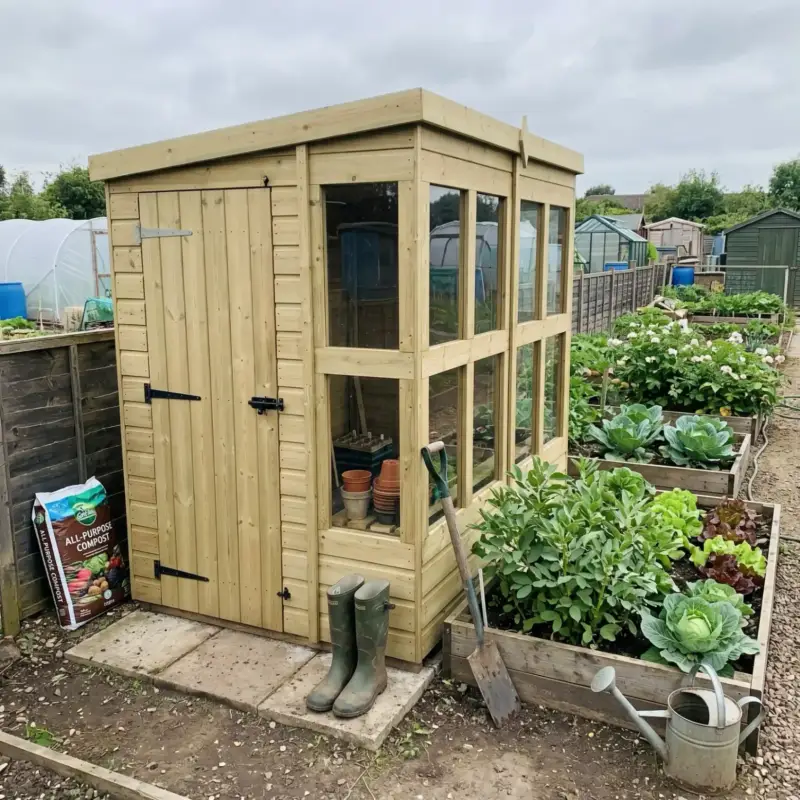
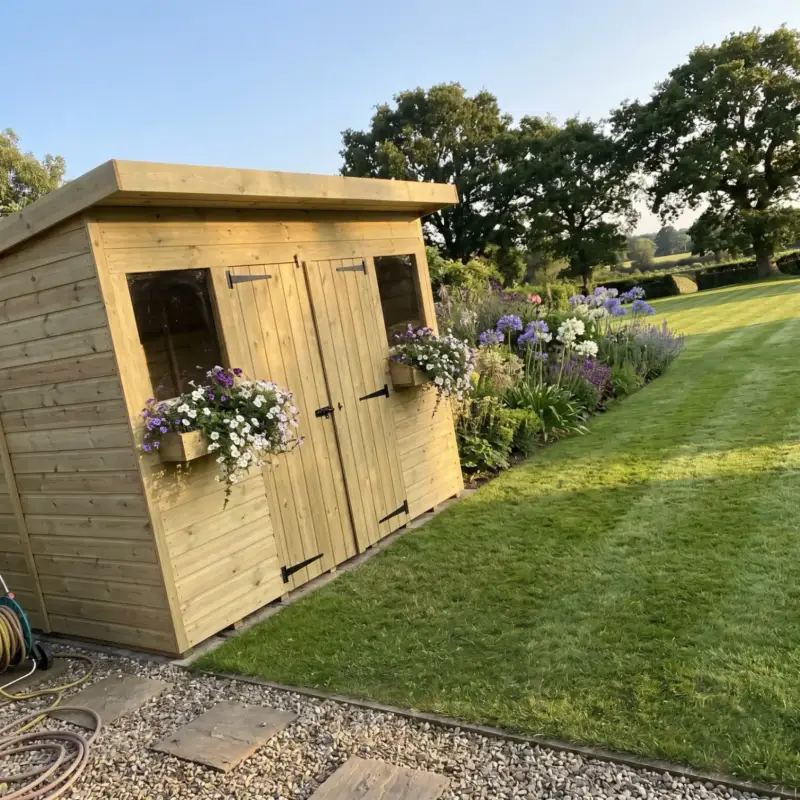
A pent shed has a single slope running from a full-height front wall down to a lower back wall. The whole building sits lower overall, the best headroom runs the full length of the tall wall, and every drop of rain travels to one predictable side — one gutter run and the water's dealt with. That clean single line reads modern, and it tucks naturally under trees and below window sills where a ridge would poke through.
Structurally, there's nothing between them. Built properly, neither shape is stronger — the difference is geometry, not muscle. And both take the same coverings: traditional felt, or an EPDM rubber upgrade. If that choice is on your mind, our felt vs EPDM guide covers it properly.
The quick decider
Choose apex if…
- The shed stands in the open, away from fences and boundaries
- You want maximum standing height down the centre
- You're storing tall kit — ladders on end, canoes, racking
- You plan a workbench down the middle of a workshop
- You like the traditional garden-shed silhouette
Choose pent if…
- It's going tight against a fence, or within 2m of a boundary
- It needs to sit under trees or below a window line
- You want all the rain arriving on one side — a single gutter run
- Your headroom should run along one long wall, not the middle
- You prefer a lower, modern profile
The 2-metre rule: where pent earns its keep
Here's the fact that settles most apex-versus-pent debates. Under permitted development rules, if any part of a garden building sits within 2 metres of a boundary, the whole building must stay under 2.5 metres tall. That cap bites hardest on an apex, because the ridge is the tallest point — squeeze the ridge under 2.5m and you squeeze your headroom with it. A pent is made for the job: its highest point is one front wall, so it slips under the cap while still giving you full standing height exactly where you stand. Boundary rules have their wrinkles — conservation areas, listed buildings, larger footprints — so give our plain-English planning guide five minutes before you commit.
Footprints tell the same story
Shape drives footprint too. Explore the sizes in our shed catalogue to compare the layouts available. A wide-but-shallow run along a fence may suit a pent layout, while a deep plot you walk into may suit an apex. Stand in your spot with a tape measure and the footprint usually picks the roof for you.
Same workshop, same bones
Tanalised framing on both
Apex or pent, every frame is pressure-treated against rot before it leaves our workshop. Neither shape is built lighter than the other.
FSC-certified timber
The same responsibly sourced boards go into both roof shapes. One standard, no shortcuts, whichever silhouette you choose.
Felt or EPDM rubber roof
Both shapes take traditional felt or an EPDM rubber upgrade — the 50-year roof — so the covering question is separate from the shape question.
Made to order since 1995
A family firm building in the West Midlands for three decades, with free delivery to UK mainland addresses on both shapes.
Apex vs pent: your questions answered
Is an apex shed stronger than a pent shed?
No — that's the most persistent myth in shed buying. Built properly, neither shape is stronger. Ours share the same tanalised framing and the same panel construction whichever roof you pick. The shape changes where the headroom sits and how the water gets off — not how the building stands up to weather.
Which is cheaper, apex or pent?
In our range, price is driven by size and material far more than by roof shape — a like-for-like footprint comes out close either way. The honest advice is to pick the shape your spot needs first, then compare the sizes and configurations listed in our catalogue.
Can a pent shed have windows and double doors?
Our catalogue includes pent sheds with double doors and windows. Each model has a set configuration; check its product details to find the layout that suits your garden.
Which is better for a workshop?
It depends where you'll stand. A bench down the centre with racking either side wants an apex, which puts peak headroom directly over your head. A bench along one long wall wants a pent, whose tall front wall gives you standing height along its whole length — and pent's wide-but-shallow footprints suit that layout perfectly.
Can I fit guttering to either shape?
Easily, and it's worth doing. A pent is the simplest guttering job going: one slope means all the rain arrives at one edge, so a single run into a water butt finishes the job. An apex sheds water both sides, so plan a run on each. Either way you keep drips off the walls and water away from the base.
The 60-second decider
Stand in the actual spot and run down this list — most people have their answer by the third question.
- ✓Within 2m of a fence or boundary? Pent — it stays under the 2.5m cap without stealing your headroom.
- ✓Under trees, or below a window you'd rather not block? Pent.
- ✓Freestanding, with space around it? Apex earns its ridge.
- ✓Storing tall things, or working at a bench down the middle? Apex.
- ✓Working along one long wall? Pent puts the height where you'll actually stand.
- ✓Wide, shallow spot along a fence? Pent goes up to 20ft wide. Deep, narrow plot? Apex goes up to 20ft deep.
- ✓Still torn? Compare the pent and apex sheds in our catalogue, or ask our team for help choosing.
See both ranges
Compare our flat-pack apex and pent sheds side by side — every size is in stock, pressure-treated and delivered next day across the UK mainland.
Compare our rangesReady to put it into practice? Every building is made in our West Midlands workshop with free mainland delivery.
Browse buildings →